Mature garden exotics
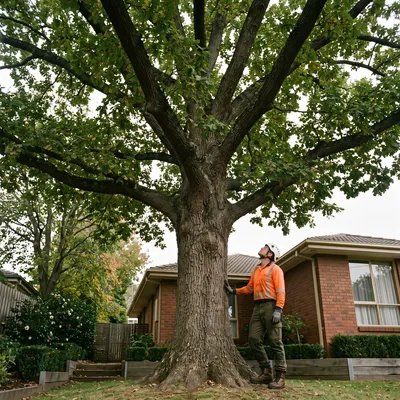
Ringwood blocks are full of old oaks, elms, liquidambars and ornamentals planted generations ago. Many can be retained with the right crown work rather than removed.
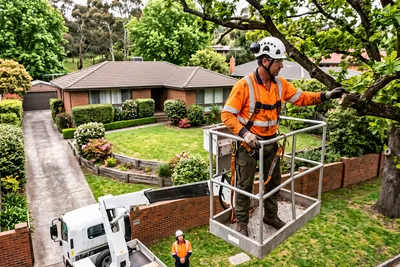
I run a small arborist crew across Ringwood and the wider Maroondah area. Before I quote a removal I look at the tree properly, the trunk, the union, the root flare, because plenty of the oaks, liquidambars and gums on these blocks can be kept with the right pruning rather than taken out. When a tree does have to go, I match the method to the block: felled whole where there's room, an elevated work platform or crane where there isn't, and where nothing else reaches we climb it and rig each limb down. Ring me or send your details through for an on-site assessment and a written quote.
Tell us about the tree and access. We reply the same day.
From a single hazardous gum to block clearing, pruning, stumps, storm work and the paperwork, one local crew handles the lot.
Once a tree is past saving I fell it whole where there's room, or take it down in sections by platform, crane or climb, so nothing lands on your roof, garden beds or the block next door.
Learn moreStorm callouts for split limbs, leaning trunks and trees down across the yard. I make the scene safe first, then assess what stays and what has to go.
Learn moreGrinding old stumps out below the surface so you can replant, re-turf or pave over the spot. Narrow machine fits the side access on most Ringwood blocks.
Learn moreCrown reduction, deadwooding and weight reduction on mature oaks, elms and liquidambars. Often this is the work that keeps a tree instead of removing it.
Learn moreSelective clearing for builds, sheds and driveways on Maroondah blocks. I work to the permit line and flag healthy trees worth keeping before anything comes down.
Learn moreOn-site chipping of prunings and storm debris, plus garden mulch dropped to the driveway. Keep the chip for your beds or have it carted off.
Learn moreWritten tree assessments for Maroondah permits, insurance and neighbour disputes, coordinated through a consulting arborist when a formal document is needed.
Learn moreSend a photo and the access details. We'll tell you what's involved and what it costs.
A clear, planned process so you know exactly what happens, what it costs and when it's done.
Call or send the form through. A rough size, the species if you know it, where it sits on the block and what's close by, roof, fence, pool or the slope below.
I look at the tree on site. Live crown, trunk wounds, the fork unions, the root flare. This is where I work out whether it can be pruned and kept, or genuinely needs to go.
You get an itemised quote. Where a tree can be saved I'll price the pruning alongside the removal so you can see both numbers and decide.
Clear ground and the tree is felled whole. Terraced gardens and tight access usually mean an elevated work platform or a crane. Where nothing else reaches we climb and rope each limb down. Most removals never need a climber.
Stump ground out if you want it, prunings chipped, the drop zone raked and the paths blown clean before I leave.
Same-day make-safe across Ringwood and surrounds. We stabilise the tree first, then schedule full removal.
03 8104 9025Tree or branch on powerlines? Stay clear and call AusNet Services on 13 17 99 or 000.
Cut the power at the meter
If any branch is touching or close to the service line into the house, switch mains power off at the meter before anyone goes near the tree.
Photograph it before you move anything
Wide shots and close-ups from a few angles. Your insurer will want them, and once material is shifted you can't get them back.
Keep clear of any line
Treat every wire as live. Ring AusNet Services on 13 17 99 to make the network safe. I don't cut near energised lines.
Call me for the make-safe
Same-day across Ringwood and the Maroondah area. I stabilise the tree first, check it for further cracks, then book the full removal.
Ringwood blocks are full of old oaks, elms, liquidambars and ornamentals planted generations ago. Many can be retained with the right crown work rather than removed.
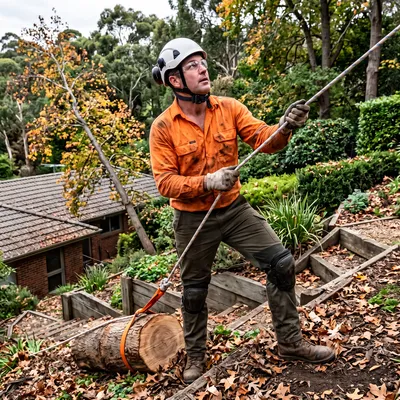
A lot of the eastern suburbs sit on sloping ground. Trees lean downhill, soil moves, and a removal here needs careful rigging so limbs travel uphill, not into the gully.
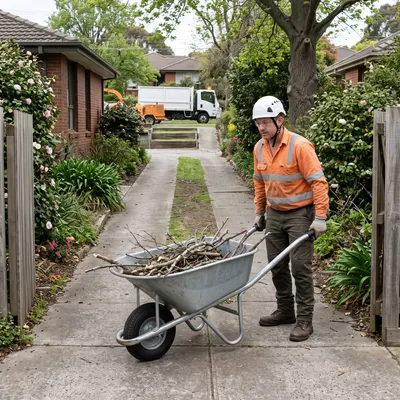
Long driveways, terraced gardens and narrow side gates are normal here. I plan the drop zone, bring narrow gear and work material out without churning up the garden.
Qualified arborists with public liability insurance and a locally based crew. Quotes are written and itemised. Sites are left clean.
I hand over a current Certificate of Currency before work starts, without being asked. Check any crew for the same before they work over your roof or a neighbour's fence.
The person who quotes your tree is the person who works on it, trained to read decay, cracked unions and root damage rather than just run a saw. That's the difference between a tree saved and a tree sold for removal.
Storm damage and hanging limbs get a visit within hours, not a spot in next week's queue. For standard work I'm on site within the week and the written quote follows straight after.
I live and work around Maroondah, so I know which streets carry the old oaks and elms, how the sloping blocks move after rain, and what the council asks before a removal.
Every reduction cut lands on a lateral big enough to take over, never a topping cut that forces weak regrowth. The tree holds its shape and you're not paying to fix it again in a few years.
Chipper, rigging kit and a narrow-access stump grinder travel on every job, with an elevated work platform or crane brought in when that's the safer way to take a tree down.
A snapshot of the common jobs we quote on across Ringwood. Every yard is different, but most fall into one of these shapes.
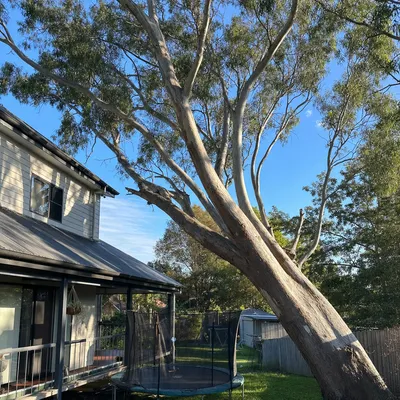 Typical before
 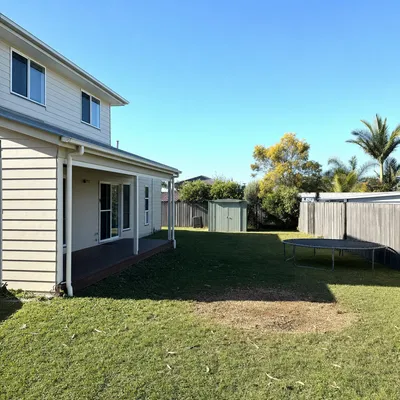 Typical after
 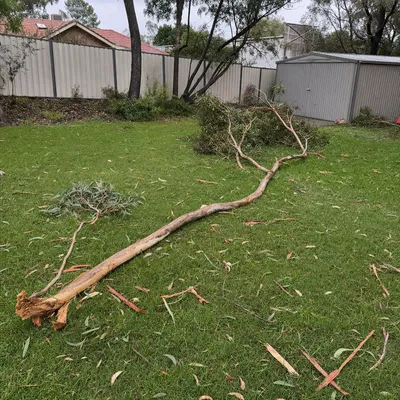 Typical before
 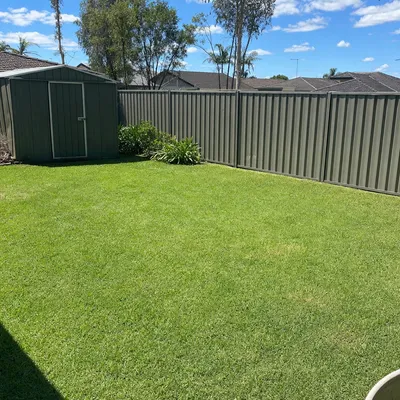 Typical after
 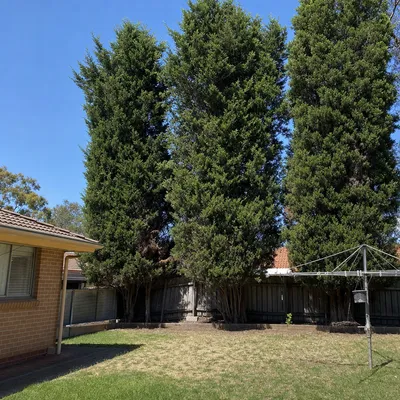 Typical before
 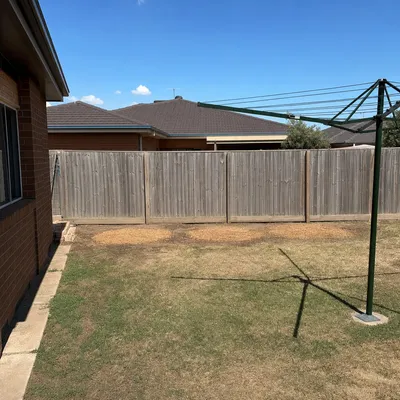 Typical after
 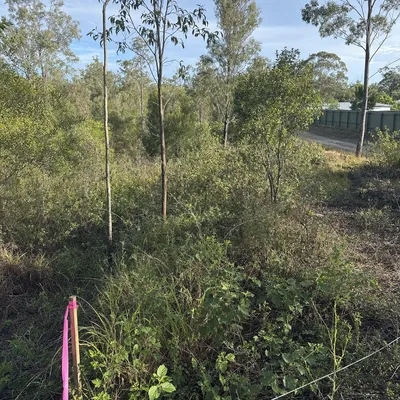 Typical before
 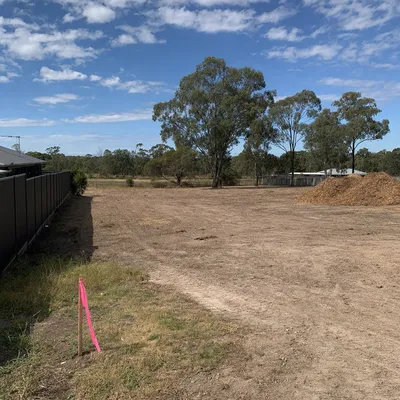 Typical after
 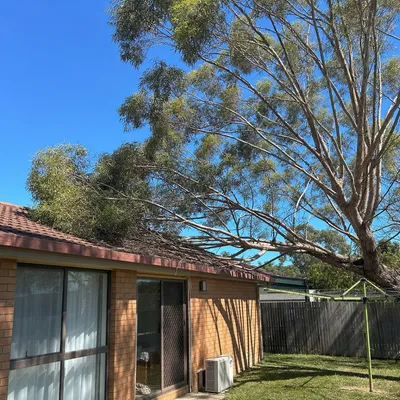 Typical before
 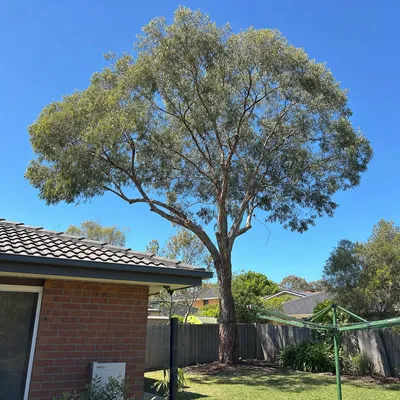 Typical after
 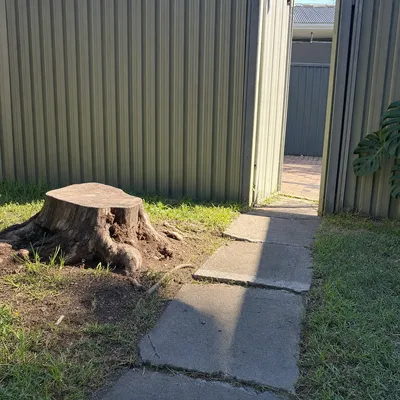 Typical before
 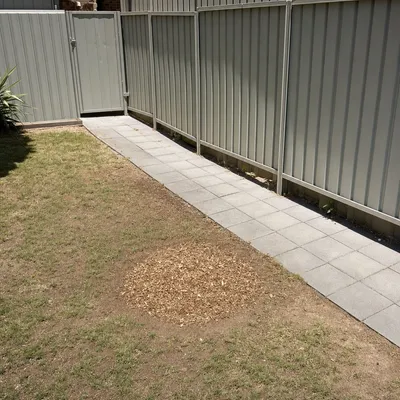 Typical after
 Honest price bands for local tree work. Every site is different, but most jobs land inside one of these bands.
Crown reduction, deadwood or weight reduction on a tree worth saving
What's in scope: Health check, reduction back to sound laterals, prunings chipped on site
6 – 12m tree, standard access, nothing high-risk underneath
What's in scope: Felled whole or taken down in sections, method to suit the access, chipped
Over 12m, leaning, on a steep block or over a roof
What's in scope: Crane or full rigging plan, distributor coordination if lines are close, full cleanup
After hours and weekend make-safe callouts
What's in scope: Added to the job above. Make safe first, full removal booked after.
The cheap quote and the expensive quote are usually the same job done two different ways. Here's how to tell which one you're getting, and what a real quote should look like before you say yes.
Looks at health before quoting removal
A good arborist checks whether the tree can be kept first. Anyone who quotes a removal sight unseen, without looking at the trunk and unions, is guessing.
Public liability insured
Ask for a current Certificate of Currency before work starts. Tree work near a roof or a neighbour's block is not something to do uninsured.
Written, itemised quote
A real quote splits out access, cutting, rigging or crane hire, chipping, stump and cleanup. One round number with no breakdown can move on the day.
On-site visit, not phone only
On a sloped Ringwood block the access and drop zone are the whole job. Insist on someone walking the site for anything bigger than a small backyard tree.
Qualified arborist on the saw
Ask who's actually doing the cutting on the day, whether that's from the ground, a platform basket or on rope, and what tickets they hold. The person quoting should be the person who knows the answer.
Prunes to the standard, never tops
Topping and lion-tailing wreck a tree and force weak regrowth. Reduction back to a real lateral branch is the right way, and a proper arborist will say so.
No cash up front
Most genuine arborists invoice on completion or take a small card deposit. Cash demanded before any work is the classic door-knocker scam.
Marked truck and real gear
A working outfit turns up with a chipper, a tipper and a name on the door. Unmarked utes knocking door to door are almost always uninsured.
Short answer: storm damage usually yes, removing a healthy tree usually no. Here's the line most Ringwood policies draw. Always confirm with your specific insurer.
Storm tree down on your house, fence or car
Most home and contents policies cover removing a storm-damaged tree once it has hit an insured structure on your property.
Make-safe to stop further damage
Securing a partly fallen or hung-up tree to prevent more damage is generally treated as part of the claim.
Clearing debris that caused the damage
If a tree came off your roof, the cleanup and the stump grind tied directly to that claim are usually included.
After-hours work your insurer approved
Emergency make-safe is usually reimbursed when you ring the insurer first and they sign off on the callout.
A healthy tree you simply want gone
Taking out a sound tree that has not damaged anything is owner paid, even if you would rather not have it there.
Routine pruning and maintenance
Crown reduction, deadwooding and gutter-clearing pruning are upkeep, so they sit outside an insurance claim.
Grinding the stump after a healthy removal
With no insured damage behind it, the stump is yours to deal with.
A neighbour's tree you want removed
Your insurer will not pay to take a tree off someone else's property.
Smooth claims come down to documentation. Send your insurer all of this on day one:
We provide the written job report and Certificate of Currency at no extra cost. Just ask when booking.
Most small backyard trees on residential blocks don't need a permit. Large, native or heritage trees usually do. Run through the questions below before booking the work.
Large established trees commonly trigger a local planning control before they can be removed.
Listed and protected trees usually need approval regardless of size or condition.
An overlay overrides the general rules. The planning report on your title shows whether one applies.
Any answer "yes"? A permit application is the safest path. Removing a protected tree without one carries fines starting around council planning penalties and going much higher for heritage trees.
Maroondah City Council permit formThe fence line is where most tree disputes start. The rule in Victoria is simple, but only if you know where the trunk actually sits at ground level.
Rule: If the trunk sits fully inside your boundary at ground level, the tree is yours even where the canopy reaches over the fence. The removal and any permit are on you.
What we do: I quote it like any other job. If the only way in is through the neighbour's yard I'll knock and ask before we plan anything.
Rule: If the trunk straddles the boundary, both owners share it and share the cost. Neither side can have it removed alone, so it takes a written agreement first.
What we do: I won't start a boundary tree until both owners have signed off in writing on the scope, the cost and the split. That keeps everyone out of a dispute.
Rule: You can prune branches or roots that cross onto your side back to the boundary, but you pay for that work, and the cuttings legally belong to the tree's owner.
What we do: I'll cut cleanly back to the boundary without harming the tree, and have a friendly word with the neighbour so it doesn't turn into a falling-out.
Stuck mid-dispute? Call us first. We'll quote both sides without taking a position. Most neighbour issues are solved by getting an honest written quote in front of both parties.
Talk to us about a boundary treeThree things you choose at quote time: what we do with the chips, whether the stump goes, and what you want left as firewood.
Prunings are chipped where we work. Leave the heap, spread it over the beds as mulch, or pay a haulage line and the chip goes with us.
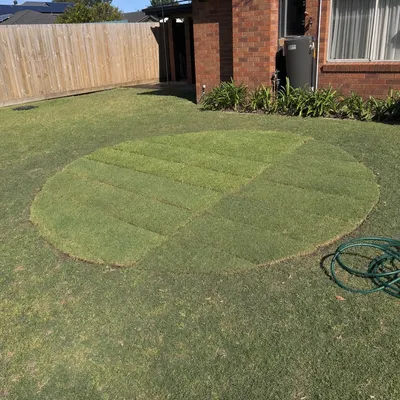
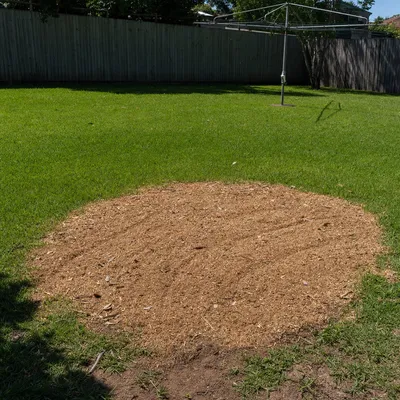
Stump grinding is its own line, usually $150–$400. Once it's out, the spot can take fresh turf, paving or a new planting.
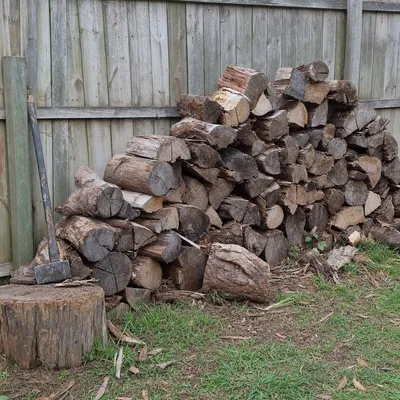
Dense rounds from gum or other hardwood can be cut and stacked along the fence on request, handy if you run a fireplace through winter.
Once the stump is ground out you're left with a mix of grindings and soil sitting in the hole, and that fill drops as the wood rots down. For a lawn finish, rake the grindings out, backfill with screened topsoil and lay your turf straight onto that. For a new garden bed, the grindings can stay, but mix in compost and give the spot a season before you plant anything you care about, since rotting wood pulls nitrogen out of the soil while it breaks down. If you're replanting a tree in the same place, ask me to chase the roots a bit deeper so the new root ball has clean ground to sit in.
A small straightforward tree can cost a few hundred dollars. A large hazardous removal with rigging and tight access can cost several thousand. Here's what we actually weigh up.
A pruning job to keep a tree is usually cheaper than taking it out. The assessment decides which way the job goes.
Height, trunk diameter and how the wood behaves. A brittle gum and a dense old oak come down very differently.
Tight side gates and sloping ground slow the work and decide whether a platform, a crane or a climber does the job.
A roof, fence or pool in the drop zone rules out a straight fell. Every limb gets lowered on rope or lifted clear by crane instead.
Grinding below the surface is a separate line. Species and how wide the roots run affect it.
Keep the chip as mulch and the quote drops. Have everything carted away and it adds a haulage line.
Need tree removal in Ringwood? We're a locally based team of qualified arborists handling everything from a single hazardous gum near the house to clearing a whole overgrown block, planned around the property. Fully insured, same-day quotes.
Serving Ringwood East, Ringwood North, Heathmont, Croydon, Bayswater, Mitcham and surrounds.
Don't see your suburb? Get in touch. We likely still cover it.
That's the first thing I check. Plenty of the mature oaks, elms and liquidambars around Ringwood get quoted for removal when a crown reduction, some deadwooding or weight reduction would keep them safe for years. I look at the trunk, the fork unions and the root flare on site, then tell you straight whether it can be pruned and held or genuinely needs to come out.
A pruning job to keep a tree often runs $400 to $1,200. A medium removal is usually $900 to $2,000. A large tree, one leaning over a roof, or anything on a steep block can be $2,200 and up. Cost comes down to size, slope, access, what's underneath and whether you want the stump out. Send the details through for an indicative figure.
Yes. We're qualified, locally based arborists and we carry public liability insurance. I can hand you a current Certificate of Currency before any work starts, and it's worth asking any arborist for the same.
For a standard quote I aim to get on site and back to you with a written assessment within the week. For storm damage, a hung-up limb or a tree that's moved since the last blow, I run same-day make-safe callouts across Ringwood and the Maroondah area.
Yes. A tree near a roof, fence or pool comes down in sections rather than being felled, worked from an elevated platform or a crane where one can reach, climbed where it can't, with every limb lowered under control. If branches are inside the clearance zone around a live span, AusNet Services isolates the network first, then we work.
It does, and it's common around here. On a ridge-and-gully block the tree usually leans downhill and there's no clean drop zone below it. We rig limbs to travel uphill, away from the slope and the neighbour below, and lower them onto the flatter ground. It takes longer, which is why a sloped site is quoted on its own merits.
Yes, and the damage often hides for years. Topping a tree forces a mess of weak regrowth that tears out in wind, and cuts made in the wrong place let decay into the trunk. Done properly, reduction back to a sound lateral branch keeps the shape and the structure. That's the whole reason I assess before I cut.
Stump grinding is a separate line on the quote. Add it if you want the spot clear for turf, paving or a new planting, or leave it off. The grinder is narrow enough for the side access on most Ringwood blocks, and I grind below the surface so the area is ready to use.
Prunings go through the chipper on site. You can keep the chip as mulch for the garden, leave it in a heap, or pay a haulage line and it leaves with us. Larger hardwood rounds can be cut and stacked along the fence for firewood. The drop zone gets raked and the paths blown clean before I go.
I check the tree before any cutting. If there's an active nest, a hollow in use or a possum living in it, we pause and either reschedule or work around it. Wildlife in established trees is normal in this part of the eastern suburbs and it's not something to cut through.
Yes. If the trunk is on the line the tree is shared, so I won't start until both owners have agreed in writing on the work, the cost and how it's split. If it's clearly your tree but the only access is next door, I'll knock and sort that out first.
Storm damage to your house, fence or car is usually covered, including the make-safe and clearing the material tied to that claim. Removing a healthy tree because you want it gone, or routine pruning, generally isn't. Ring your insurer before you authorise anything, and ask the arborist for a written job report and Certificate of Currency to attach to the claim.
Pick one that checks whether the tree can be kept before quoting a removal, carries public liability insurance, visits the site rather than quoting over the phone, and gives you a written quote that breaks out access, cutting, rigging or crane hire, chipping, stump and cleanup. Steer clear of cash-up-front door-knockers in unmarked utes.
Separate lines for the on-site assessment, site setup, the crew, rigging or crane work, on-site chipping, optional stump grinding below the surface, haul-away of chip or rounds if you want it, and GST. One round number with no breakdown usually means the price can climb once the crew is on site.
If it was your tree, you are. Your home and contents insurer usually covers removing it once it's damaged an insured structure, so call them first and photograph everything before it's moved. If a neighbour's tree fell onto your place, you arrange the removal but can recover the cost through your insurer if there's damage, or theirs if negligence can be shown.
Often, yes. Maroondah City Council commonly controls removal of larger established trees, protected natives, listed trees, and anything where a vegetation protection or significant landscape overlay sits on the title. Dead, dying or dangerous trees and small trees are usually exempt. Always confirm with the council before the job, and document the tree's condition first.
Most of the cost is the rigging and the risk, not the cutting. A tree you can fell straight to open lawn is fast. One leaning over a roof on a sloped block, behind a narrow gate, near the lines, needs every limb brought down piece by piece, on rope or by crane. That's hours of skilled work, specialist gear and insurance. The saw work is the small part.
Once the stump is ground out, backfill the hole with screened topsoil rather than just grindings, since the wood slumps and pulls nitrogen as it breaks down. For lawn, lay turf over the topsoil and water it in daily for the first ten days or so. For a garden bed, let the spot sit a season first. If you're putting a new tree in, I can grind deeper so the root ball has clean ground.
Send the tree size, access and timing. We reply the same day with an honest, itemised quote. No high-pressure sales.